Visitor Assistant
The Scenario
With the popularity of our MITRE@Work app for employees, our team wondered about an “app” for visitors to MITRE's offices. We weren't sure where this idea would take us but obtained a small amount of innovation funding to explore the possibilities.
The Visitor Assistant prototype turned into a valued application for employees who regularly host meetings and events. Feedback emails showed users were actively promoting the tool to colleagues, with one administrative assistant commenting that she "felt so professional" sending these comprehensive visitor links for her meetings.
My Role
I led the UX research and design for this prototype, conducting interviews to understand pain points and needs. I collaborated with our developers to evaluate different implementation approaches and what it would take to make them work. I then designed both the link generation form for hosts and the visitor-facing pages that would provide customized information.
In addition to collaborating with our development team, I worked closely with our security teams and events coordinators to refine the features and content. I also took charge of updating our map data, partnering with our indoor maps vendor improve navigation from our parking garages, adding points of interest needed for our directions, and submitting updates/corrections to Google Maps.
How We Got There
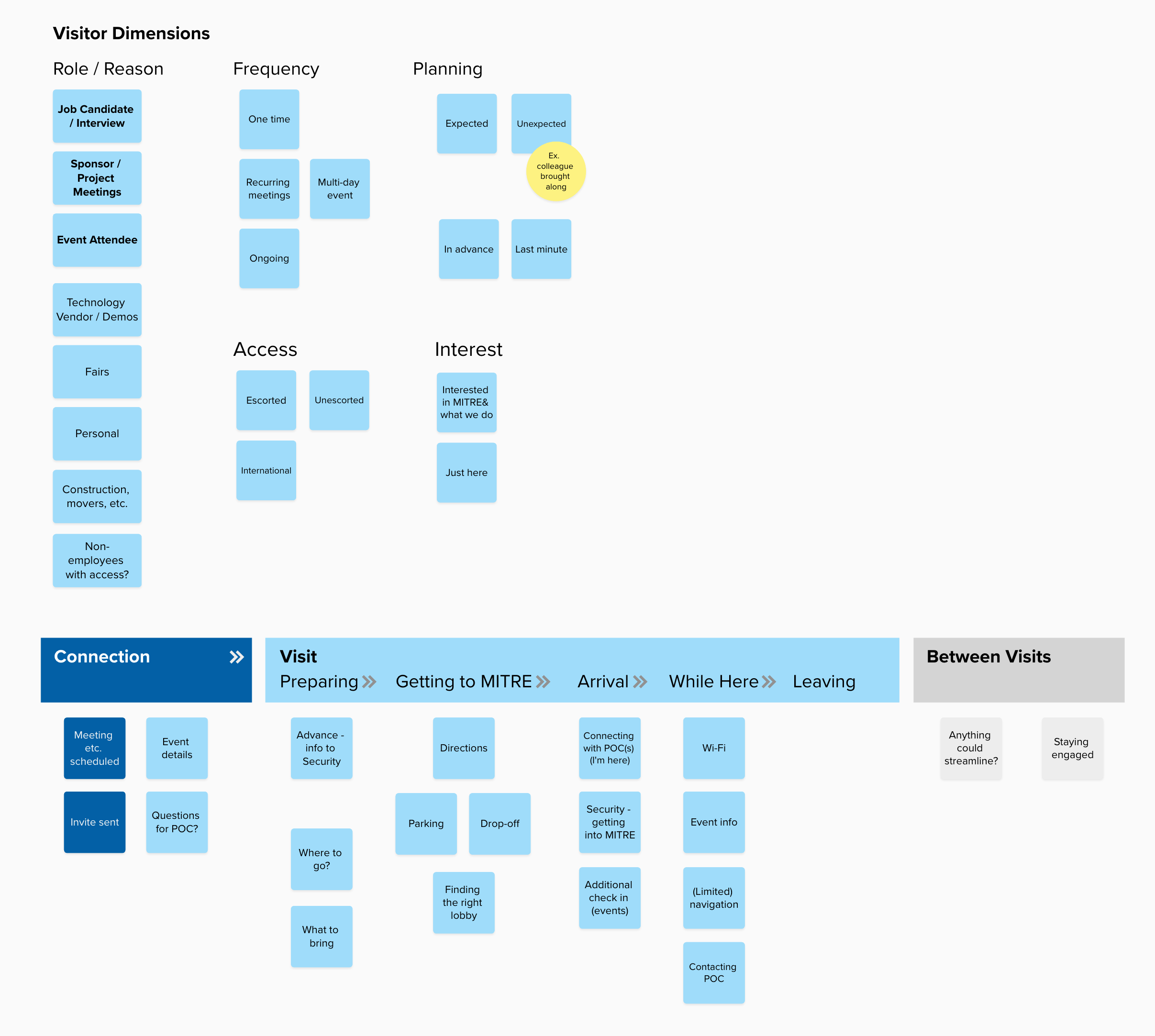
I interviewed a variety of potential MITRE users – people who host sponsor meetings, HR staff who schedule interviews, and our visitor-related teams in security and event planning. It quickly became clear that some of ideas being brainstormed were overkill, such as creating a system to notify people when their visitor arrived vs. simply letting security desk staff make a call. (While I would have loved to talk to outside visitors, we weren't able to coordinate the approvals to recruit them for this small innovation effort.)
While considering what features would be useful, I kept coming back to our interactive indoor maps. One challenge frequently reported by hosts was getting visitors to the right lobby, as searching for MITRE in Google Maps wouldn't direct them to the correct building. Updating the permissions and outdoor spaces of our maps would provide a way to help visitors navigate our campus.
We also had to consider how to deliver this information. Though we kept calling it an 'app', I questioned whether one-time visitors would want to install something. We investigated app clips that wouldn't need installation, but these required either scanning a QR code (too late for directions) or tapping a link in a text message, which could be burdensome for some MITRE hosts sending the information.
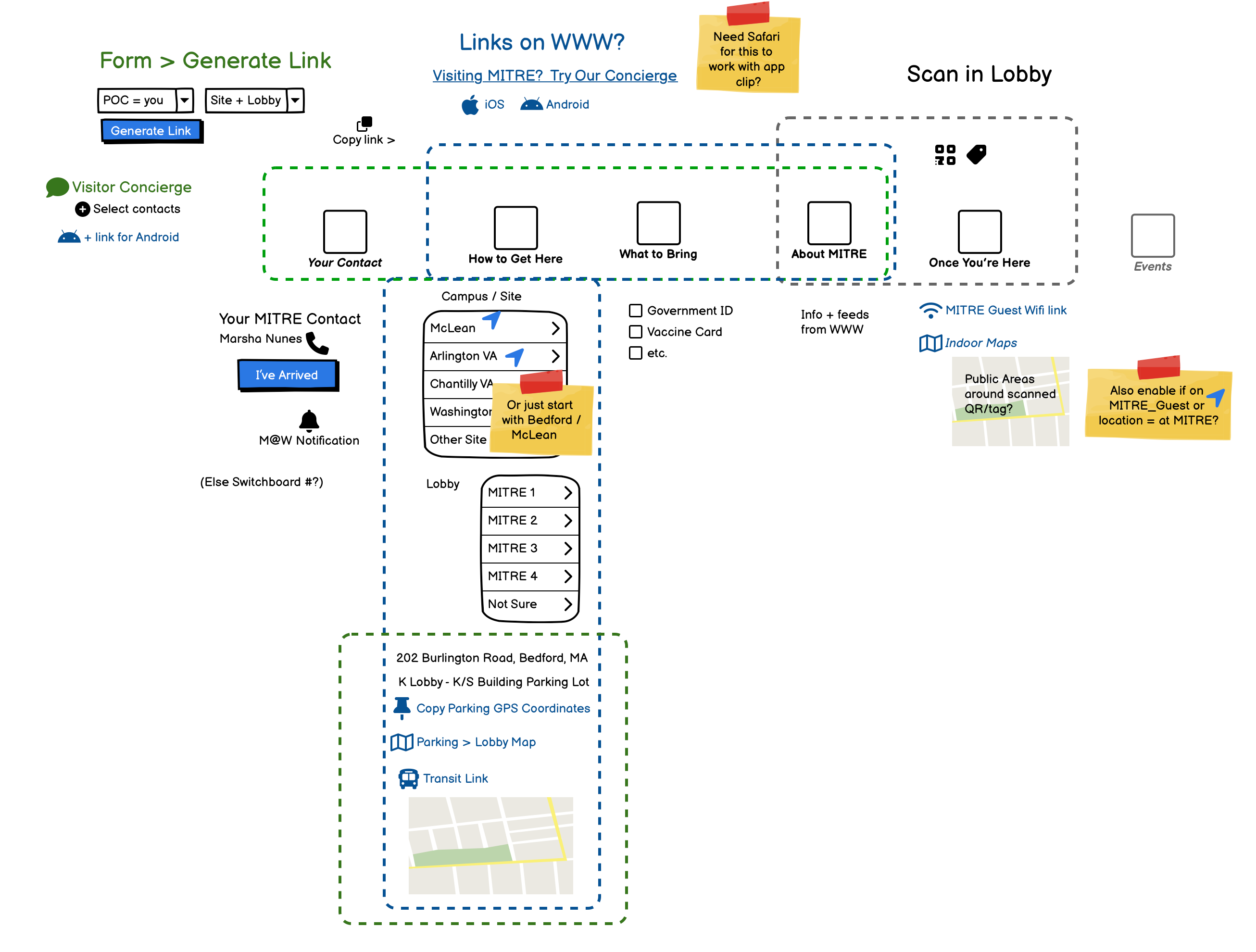
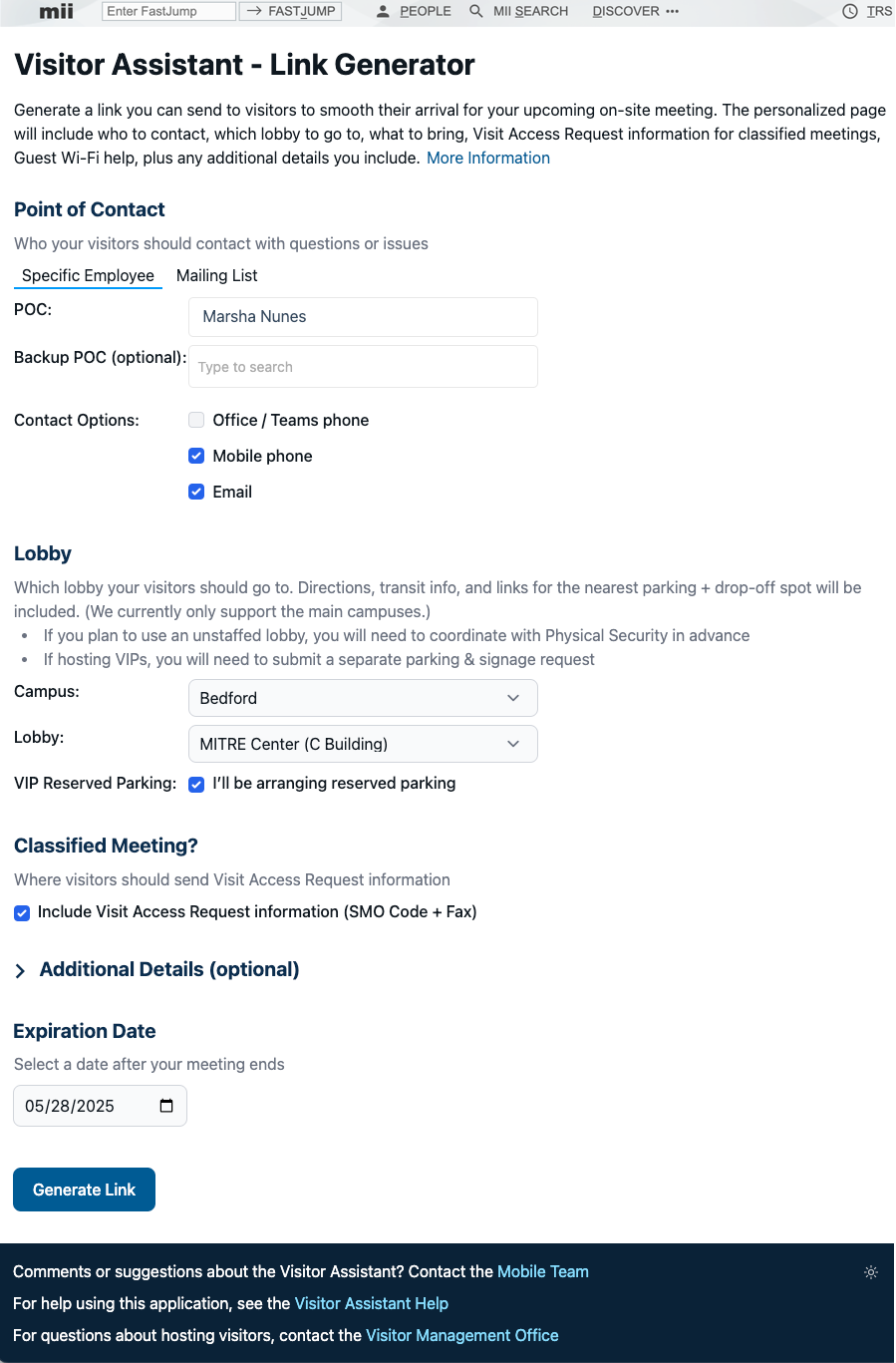
In the end we decided on a responsive web application. I designed a form where a MITRE host can select from a few options to generate a unique URL to share with meeting attendees. This avoided the visitor needing to install something, kept the creation easy for the host (ex. not requiring the setup of accounts), and offered more flexibility for sharing the link (emails, DMs, meeting invites, conference announcements, and so on). One drawback to our simple setup was needing to generate a new URL if the information changed, but this seemed less likely given the minimal entry involved.
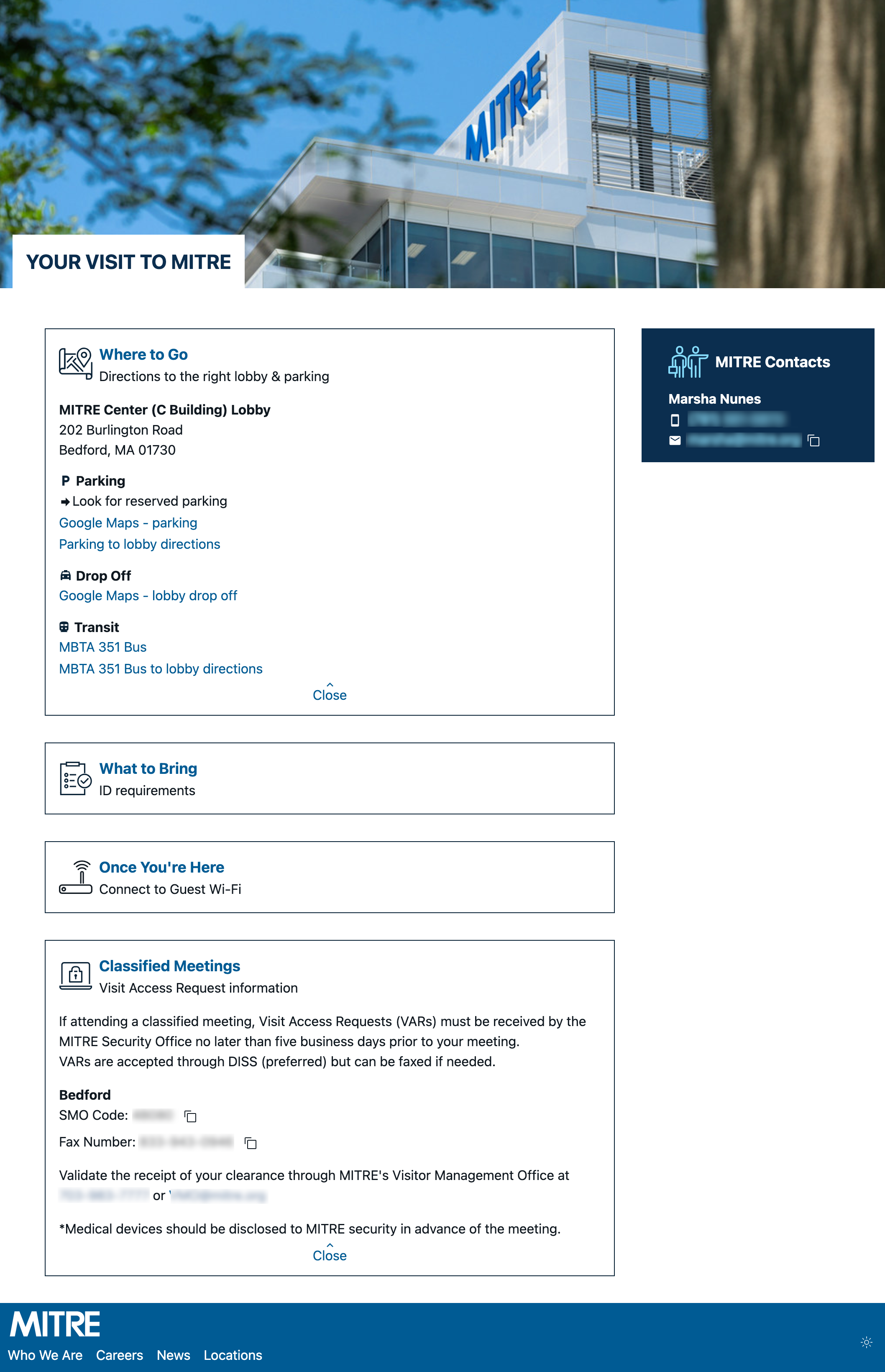
The form is very quick to fill out. The user is the primary POC by default and just needs to check off the contact info they wish to share. The main thing they need to select is which campus and lobby to direct their visitors to. Indicating that the meeting is classified will include all the IDs and phone numbers the visitor needs to submit that information in advance.
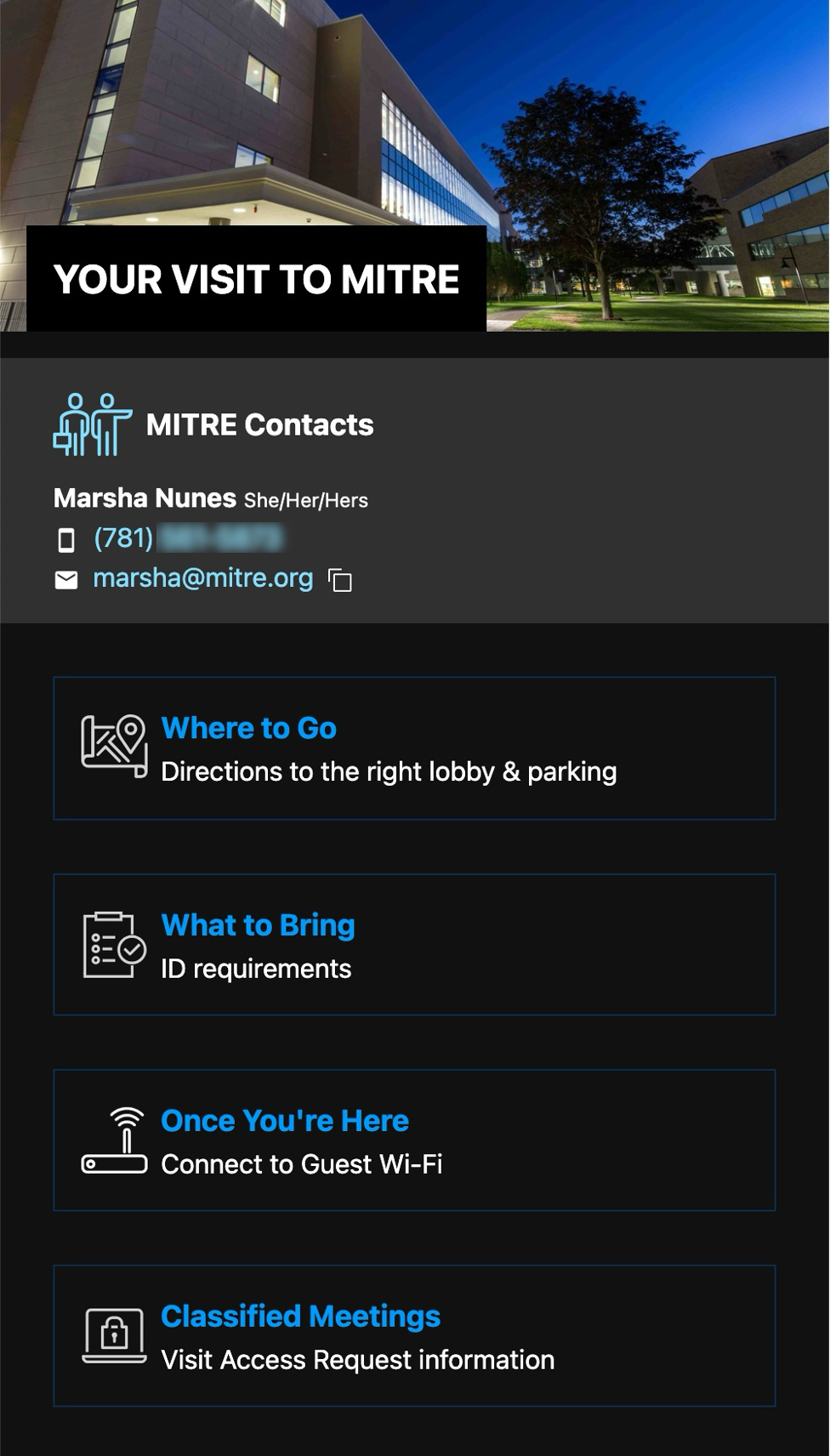
The generated page gives visitors everything they need: Google Maps links for drop off points and parking, plus our own maps showing how to get from the garage or transit stop to the right lobby. The page also includes additional helpful information automatically, such as what to bring (which was much more complicated during the pandemic) and how to connect to guest wi-fi once they arrive.
After we implemented an initial prototype, I worked with the visitor office and events teams to further refine the content and fields, adding more detail to the classified meeting instructions and including a mailing list POC option, making the tool more versatile for different meeting types.
Approved for Public Release; Distribution Unlimited. Public Release Case Number 25-1496
The author's afiliation with The MITRE Corporaton is provided for identification purposes only, and is not intended to convey or imply MITRE's concurrence with, or support for, the positions, opinions, or viewpoints expressed by the author.
©2025 The MITRE Corporation. ALL RIGHTS RESERVED.